Different types of batteries
The battery types are, of course, also important. Your options are outlined below.
Lithium Ion
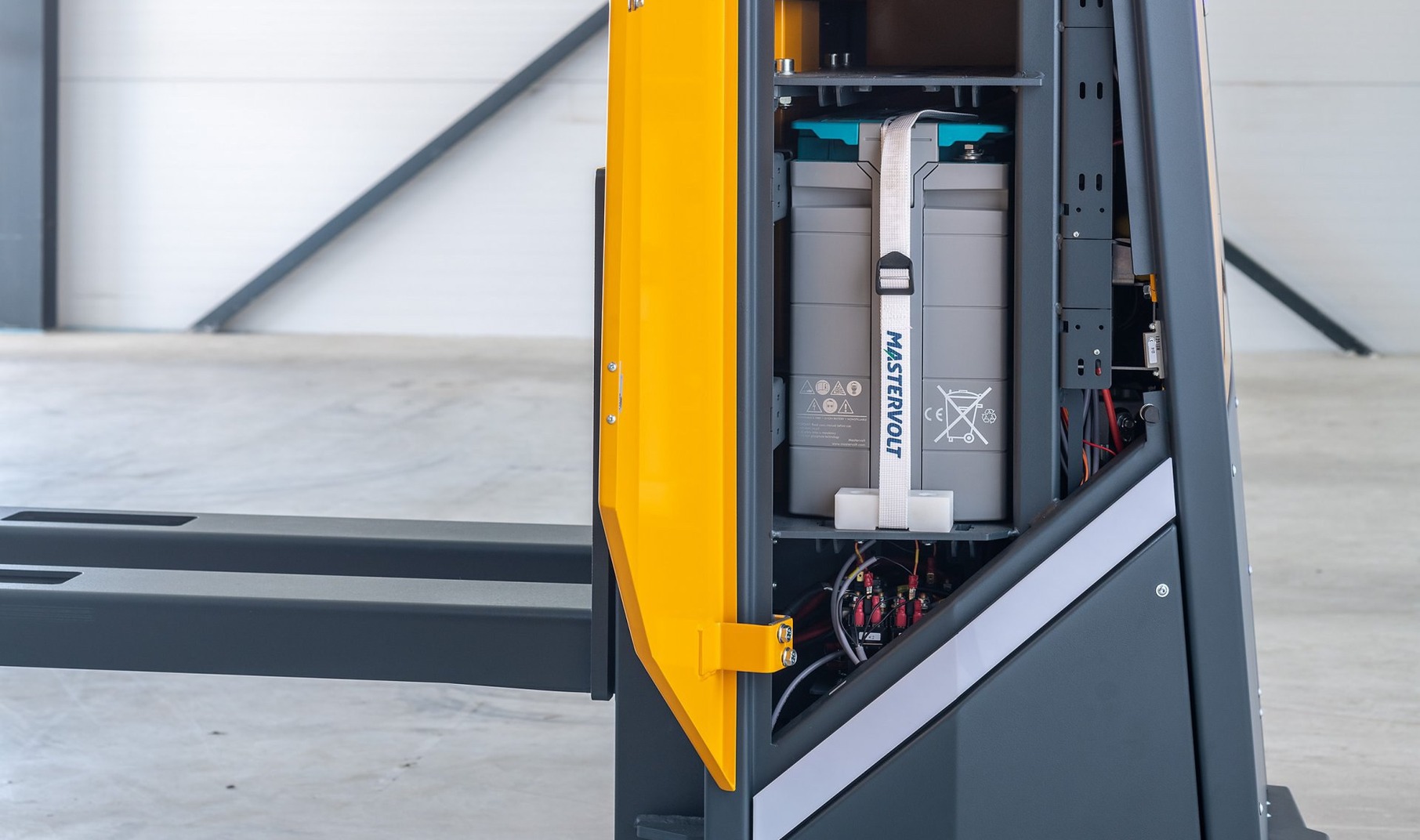
First, WEWO Techmotion offers you the best Lithium Ion batteries. These batteries are suitable for the toughest conditions, such as high charge/discharge currents, humid environments and mechanical shocks or vibrations. In order to cope with such circumstances, these batteries have a robust, watertight housing and the best Battery Management System (BMS) available. The BMS ensures effective use of each individual cell and always indicates the current status of your battery.
Dry Gel
In addition, we offer the option of Dry Gel batteries, in which the electrolyte is absorbed by a gel. These batteries are maintenance-free and do not emit any gases during normal use. Dry Gel batteries can be mounted anywhere and do not require additional extraction. These batteries are ideally suited as a consumer battery and for cyclic use and can be charged very quickly.
Charging systems
1. Battery swap
As soon as the battery in your AGV is (nearly) empty, the vehicle moves to the base station. Here, you can manually change the battery, i.e. a battery swap. A charged backup battery is always present at the base station. What is the major advantage of battery swap? After the manual swap, the AGV can immediately continue at full capacity. In other words, a battery swap boosts the uptime of your AGV. The empty battery is, of course, put on the charger straight away, and serves as a backup battery.
2. Manual battery charging
Manual battery charging is an economic and easy way of charging your AGV(s). This solution is particularly effective when working in single shifts or two shifts. You can choose between an integrated charger and an external charger. By connecting the AGV to the charger or the mains at the end of a shift, it can be charged outside shift times.
3. Opportunity charging
Opportunity charging is a charging option that can be used both automatically and manually. Depending on the number of amps and charging time, the battery can be fully charged or, in order to bridge the time until the next charge, charged partially. What is the major advantage? By opting for a small charge between times, your AGV, despite a limited battery capacity, can still be used 24/7.
4. Automatic charging
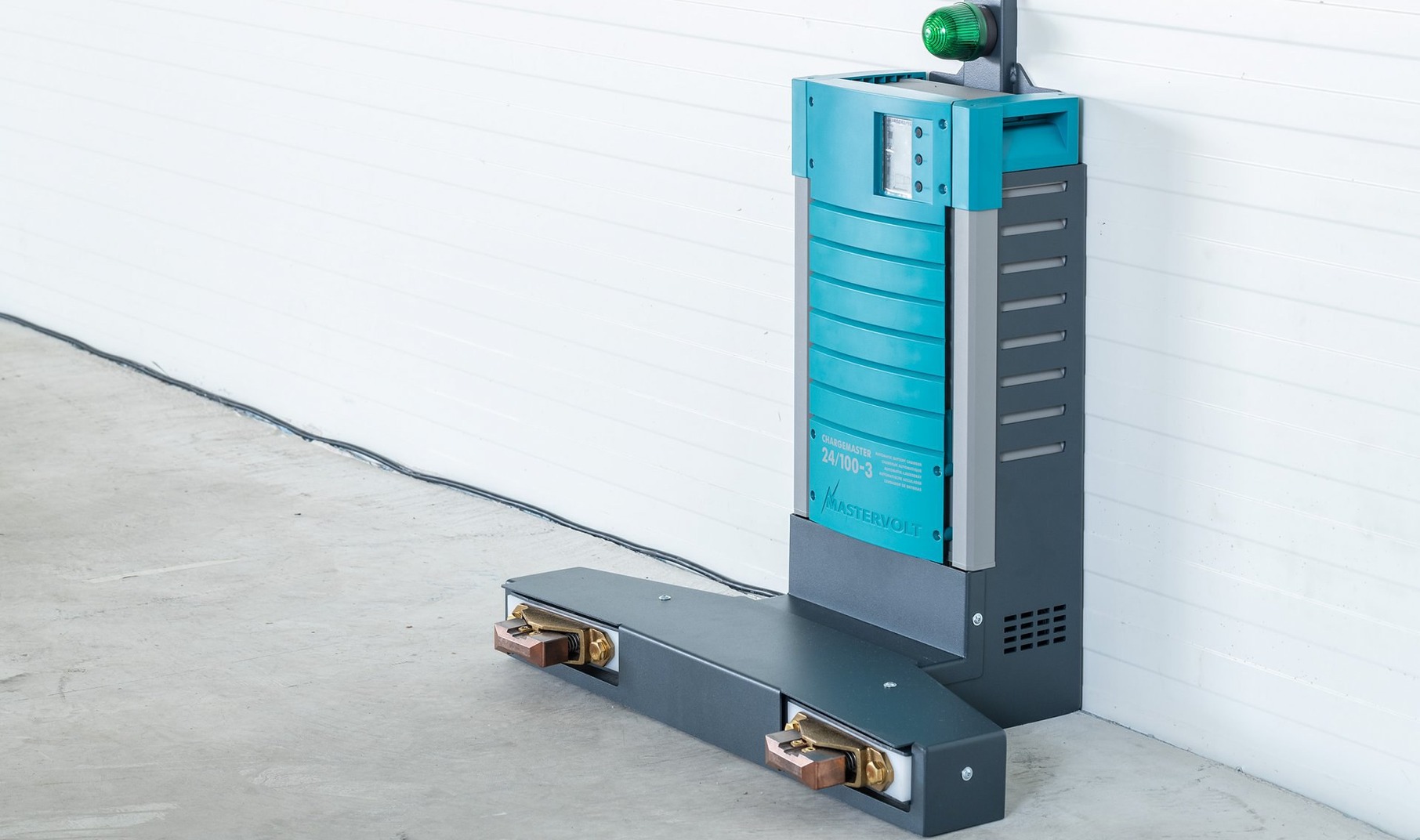
Automatic charging is charging your AGV without manual interference. When an AGV has reached its minimum battery level, it will complete its assignment and automatically position itself at an available charging station. Once in position, the integrated pantograph makes physical contact with the charging station and the charging process is initiated. Depending on the desired (programmable) battery level, your AGV disconnects automatically and the AGV is available for its next assignment.
Battery for automated guided vehicles
Are you looking for automated guided vehicles? WEWO Techmotion likes to think along with you, also about the right energy management. We advise which is the right battery for your AGV. Challenge us, make your wishes known and schedule a no-obligation consultation!